


In most cases augmentation mammoplasty does not affect the ability to breastfeed. However, much depends on the surgical technique and individual characteristics of the patient’s body. This topic is usually discussed with the surgeon during consultation.
Anna Brodska
Augmentation Mammoplasty (Breast Implants)
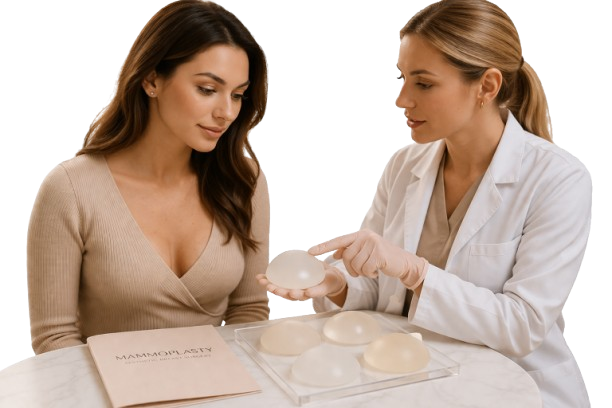
Augmentation mammoplasty allows you to increase breast volume, improve shape, and create harmonious body proportions.
Augmentation mammoplasty is a plastic surgery procedure aimed at increasing breast volume using special implants. The operation makes it possible to change the size, shape, and proportions of the breasts as well as correct asymmetry. Modern implants are available in different shapes and sizes, allowing surgeons to select the most suitable option according to the patient’s anatomy and desired outcome.
About the service
Augmentation mammoplasty is a surgical procedure in which breast volume is increased with the help of implants. The procedure is performed to improve breast shape, restore lost volume, or create more pronounced body proportions.
Breast implants may differ in shape, size, and surface structure. During the consultation, the plastic surgeon helps select implants that best match the patient’s body structure and aesthetic goals.
The operation allows for fuller, more symmetrical breasts and helps improve the overall balance of body proportions.
Indications for augmentation mammoplasty
In most cases the procedure is performed for aesthetic reasons, such as increasing breast size or improving breast shape.
The most common indications:
• naturally small breast volume
• breast asymmetry
• changes in breast shape after pregnancy or breastfeeding
• loss of breast volume after weight loss
• desire to improve body proportions
Before surgery, the doctor evaluates the condition of the tissues, the shape of the chest, and helps determine the optimal implant size.
How the surgery is performed
Augmentation mammoplasty is performed in an operating room under general anesthesia. The surgery usually lasts from one to two hours.
During the procedure, the surgeon makes a small incision through which the implant is placed. The implant may be positioned either under the chest muscle or under the breast gland tissue depending on the patient’s anatomy.
After the implants are placed, the incisions are closed with cosmetic sutures. The placement of incisions is carefully planned so that postoperative scars remain as discreet as possible.
Individual planning of the procedure
Preparation for augmentation mammoplasty includes a detailed consultation with a plastic surgeon. The doctor evaluates breast shape, skin condition, tissue thickness, and other anatomical characteristics.
Selecting the appropriate implants is one of the key stages of surgical planning. The surgeon considers the patient’s expectations, body proportions, and tissue characteristics.
Modern surgical techniques make it possible to achieve natural-looking results while maintaining a high level of safety.
Indications for augmentation mammoplasty
Augmentation mammoplasty is performed to increase breast volume or improve breast shape. The procedure may be recommended for patients with naturally small breasts, asymmetry, or changes in breast shape after pregnancy and breastfeeding. It may also be performed after volume loss following weight reduction. The final decision about surgery is made after consultation with a plastic surgeon.
Contraindications for augmentation mammoplasty
The surgery is not performed in cases of acute infectious diseases, blood clotting disorders, or severe chronic illnesses. The procedure is also not recommended during pregnancy or when there are active inflammatory processes in the treatment area. Before surgery, the patient undergoes a medical examination to evaluate possible risks.
Preparation for augmentation mammoplasty
Before surgery, a consultation and necessary medical examinations are performed. The patient may be advised to undergo laboratory tests, breast ultrasound, or other diagnostic procedures. Some time before surgery the doctor may recommend limiting smoking and avoiding certain medications. Following these recommendations helps properly prepare the body for surgery.
Recovery after augmentation mammoplasty
After surgery patients are advised to wear special compression garments and limit physical activity. In the first days swelling, a feeling of tightness, or mild discomfort may occur. These symptoms gradually decrease as the tissues heal. The final result of the surgery develops over several months.
Anna Brodska
Variety of service All prices
Mammoplasty
Augmentation Mammoplasty (Breast Implants)
from 277 405 uah (price from €5500 - to the NBU exchange rate on the day of payment)
Anna Brodska
Відгуки пацієнтів
Publications about mammoplasty
All publicationsAnna Brodska
Frequently asked questions about augmentation mammoplasty (with implants)
Mammoplasty
What implants are used for breast augmentation
Modern breast implants differ in shape, size, and surface texture. Most commonly implants filled with silicone gel are used. The choice of implants depends on the patient’s anatomical features and desired result.
Where are the incisions made during surgery
Incisions may be made in different areas — in the fold under the breast, around the areola, or in the armpit area. The choice of incision depends on the surgical plan and anatomical characteristics of the patient. The surgeon selects the method that provides the best aesthetic outcome.
Will the result look natural
Modern implants and surgical techniques allow surgeons to achieve a natural appearance of the breasts. Proper selection of implant shape and size plays an important role in this process. That is why the consultation and planning stage is very important.
When will the results be visible
Initial changes are visible immediately after surgery. However, the final result develops gradually as swelling decreases and the tissues adapt to the implants. The final outcome is usually evaluated after several months.
Do implants need to be replaced over time
Modern implants are designed for long-term use. In many cases they can remain in place for many years without replacement. However, regular medical check-ups help monitor the condition of the implants.
Is breastfeeding possible after surgery
