


The recovery period after the procedure usually lasts several weeks. Most patients can return to everyday activities within a few days. Complete healing occurs gradually as the tissues recover.
Anna Brodska
Blepharoplasty
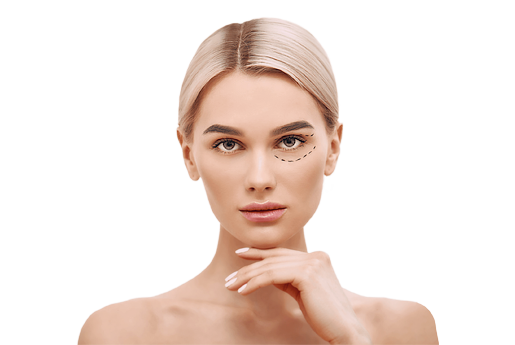
Blepharoplasty helps remove excess eyelid skin, reduce signs of fatigue, and make the eyes appear more open and refreshed.
Blepharoplasty is a plastic surgery procedure aimed at correcting the upper or lower eyelids. The operation allows removal of excess skin, reduction of fat herniations, and improvement of the contours around the eyes. As a result, the eyes appear more open and the face looks younger and more rested.
Blepharoplasty
About the service
Blepharoplasty is a surgical procedure designed to rejuvenate the eyelid area. The operation allows correction of age-related changes in the skin and tissues around the eyes.
With age, the skin of the eyelids loses elasticity, which may lead to excess skin, wrinkles, or fat protrusions. These changes can create the appearance of tired or heavy eyes.
Blepharoplasty helps eliminate these changes, improve the contour of the eyelids, and make the eyes appear more open.
Indications for blepharoplasty
The procedure may be recommended for patients who experience age-related or anatomical changes in the eyelid area.
The most common indications:
• excess skin of the upper eyelids
• fat herniations under the eyes
• puffiness or under-eye bags
• wrinkles in the eyelid area
• the effect of “heavy” eyelids
During the consultation, the plastic surgeon evaluates the condition of the skin, muscles, and fat tissues around the eyes.
How the surgery is performed
Blepharoplasty is performed under local or general anesthesia depending on the extent of the procedure. Incisions are usually made in the natural folds of the eyelids or on the inner side of the lower eyelid.
During the surgery, the surgeon removes or redistributes fat tissues and may also remove excess skin.
The procedure usually lasts between one and two hours.
Individual approach to correction
Before undergoing blepharoplasty, the patient has a consultation with a plastic surgeon. The doctor evaluates the anatomical features of the eyelids, the condition of the skin, and the degree of age-related changes.
Based on this evaluation, an individualized correction plan is created. In some cases, the procedure may be combined with other rejuvenation techniques.
Anna Brodska
All prices
Blepharoplasty
Face
Circular Blepharoplasty
from 151 312 uah (price from €3000 - to the NBU exchange rate on the day of payment)
More info
Lower Blepharoplasty
from 85 743 uah (price from €1700 - to the NBU exchange rate on the day of payment)
More info
Upper Blepharoplasty
from 85 743 uah (price from €1700 - to the NBU exchange rate on the day of payment)
More info
Anna Brodska
Відгуки пацієнтів
Anna Brodska
Frequently asked questions about blepharoplasty
Blepharoplasty
What types of blepharoplasty exist
Blepharoplasty can be performed on the upper or lower eyelids. In some cases, a combined correction of both areas is performed. The type of procedure depends on the individual indications of the patient.
Will scars remain after surgery
Incisions are usually placed in the natural folds of the skin. Because of this, scars are almost invisible after healing. Over time they become even less noticeable.
Will the shape of the eyes change after the procedure
The goal of the surgery is to improve the contour of the eyelids without changing the natural shape of the eyes. After healing, the eyes appear more open and refreshed while maintaining their natural shape.
How long the results of blepharoplasty last
The results of the surgery can last for many years. Although the procedure does not stop the natural aging process, it significantly improves the appearance of the eyelids. The longevity of the effect depends on individual characteristics.
Can blepharoplasty be combined with other procedures
Blepharoplasty is often combined with other rejuvenation procedures. For example, it may be performed together with a facelift or various аппарат-based treatments. This approach allows for a more comprehensive aesthetic result.
When patients can return to normal life
