
Anna Brodska
Malar bags under the eyes
 16.09.2026
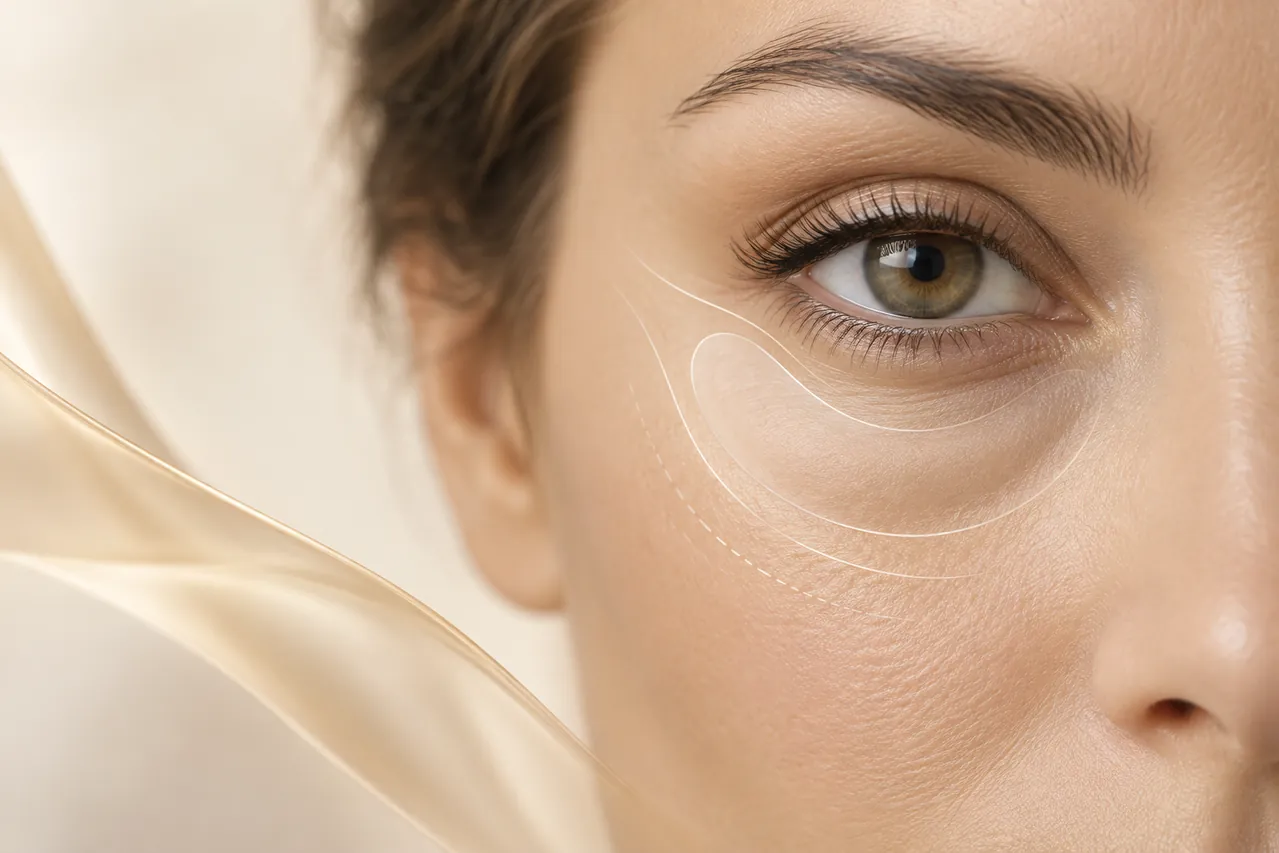
Fullness over the upper cheek is often called an under-eye bag, although it may actually be a malar bag or festoon. It sits below the lower eyelid over the cheekbone and may remain visible throughout the day.
Why malar bags develop
Genetics, midface anatomy, ligament laxity, fat-compartment changes, skin quality and ageing all contribute. Fluid retention may accentuate the contour but is rarely the only cause.
Malar bag or temporary puffiness?
- A malar bag lies over the cheekbone rather than directly beneath the lashes.
- Its outline tends to persist during the day.
- Ordinary puffiness often fluctuates with sleep, salt, alcohol or allergy.
- A lower-eyelid fat pocket sits higher and requires different planning.
Why creams have limits
Skin care may hydrate the surface and temporarily reduce mild puffiness, but it cannot reposition fat compartments or deep supporting structures.
Correction options
The plan depends on the combination of festoons, lower-eyelid fat, tear-trough hollowing and loose skin. Skin care, energy-based treatment, volume correction or surgery may be discussed. Lower blepharoplasty is not a universal treatment for malar bags.
FAQ
Can malar bags appear in young people?
Yes. Inherited anatomy may make them visible before obvious ageing.
Will weight loss remove them?
Not necessarily; loss of facial volume can sometimes make contours more visible.
When is urgent assessment needed?
Sudden one-sided swelling, pain, redness or visual symptoms require medical assessment rather than cosmetic treatment.
This article is educational and does not replace an examination. The cause of a concern and the appropriate correction method are determined individually during consultation.
Medically reviewed by Anna Brodska, plastic surgeon. Updated 16 September 2026.
